Acupuncture for Pain Relief
TCMCI-registered acupuncturist with over 25 years of clinical experience.
Pain - whether it has come on suddenly or built up over months and years - can affect every aspect of daily life. Sleep, movement, work, and mood are all touched by it. Acupuncture offers a well-established, evidence-informed approach to managing a wide range of pain conditions, and is recommended by NICE for chronic primary pain.
Kate has over 25 years of clinical experience treating patients with musculoskeletal and other pain conditions. She takes a thorough history at the first appointment and develops a treatment plan tailored to your specific situation. Pain rarely resolves in a single session - most people find that meaningful improvement develops progressively over a course of treatment, with each session building on the last.
Get in touch to discuss your situation or book an initial appointment.
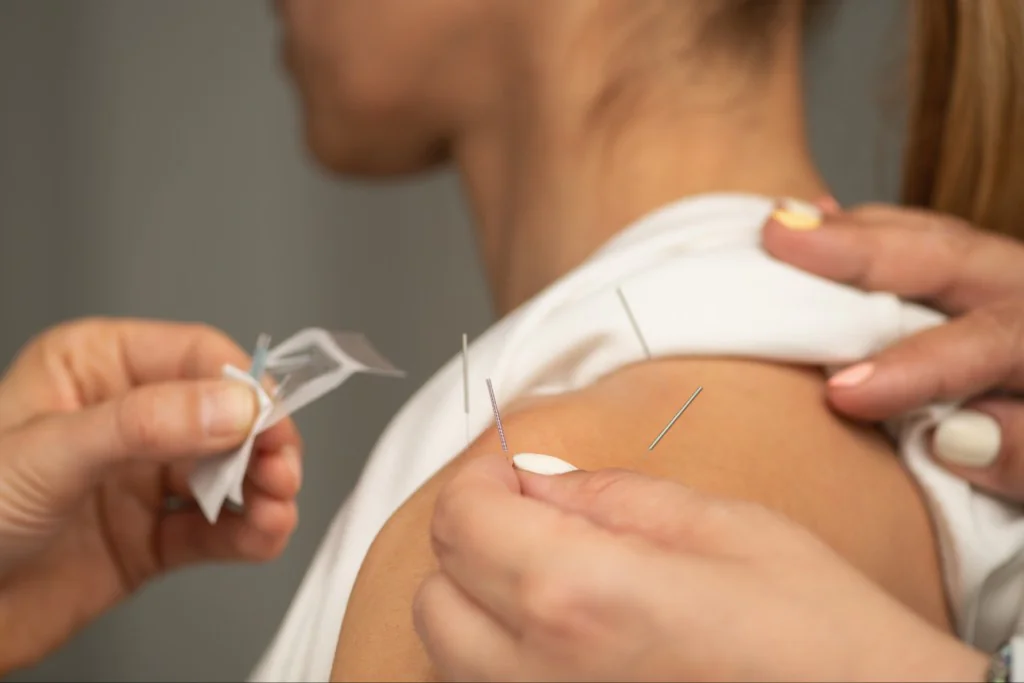
Conditions Kate Can Help With
Acupuncture is commonly sought for the following pain conditions:
- Back pain - lower and upper back, including chronic and recurring pain
- Neck pain - including stiffness and restricted movement
- Headaches and migraines - tension headaches and recurring migraine patterns
- Shoulder pain and frozen shoulder - including restricted range of movement
- Sciatica - nerve pain radiating from the lower back into the legs
- Joint pain and arthritis - osteoarthritis and inflammatory joint conditions
- Knee pain - including pain from wear and degenerative changes
- Tennis elbow - lateral epicondylitis and repetitive strain
- Muscular pain and stiffness - including fibromyalgia and widespread pain
- Post-operative pain - supporting recovery and managing pain after surgery
Clinical evidence
In 2021, NICE (the body that sets clinical guidelines for the NHS) recommended acupuncture as one of only three non-medication treatments for chronic primary pain. A major meta-analysis by Vickers et al., pooling data from 39 trials and over 20,000 patients, found that acupuncture produced significant pain relief compared to controls - and that these benefits persisted for at least 12 months after treatment.
How Acupuncture Helps with Pain
Traditional Chinese medicine views pain as a disruption to the flow of energy (qi) through the body's pathways. Acupuncture works by inserting fine needles at specific points to release these blockages and restore balanced circulation.
From a contemporary perspective, research suggests that acupuncture stimulates the release of endorphins - the body's natural pain-relieving chemicals - increases local blood flow, and influences how pain signals are processed in the nervous system. It also reduces inflammation in the treated area and can improve the mobility and function of joints and muscles.
These mechanisms are cumulative. Each session builds on the last, gradually shifting the body's pain response. This is why a course of treatment rather than a one-off appointment is the usual approach - and why patients are encouraged to commit to an initial course before assessing progress.

What to Expect from Treatment
At the first appointment (one hour), Kate takes a detailed history - the nature, location, and duration of your pain, what makes it better or worse, and how it is affecting your daily life. This shapes the treatment plan.
For most pain conditions, an initial course of four to six weekly sessions is recommended. Chronic or long-standing pain - particularly conditions present for many months or years - often requires a longer course before the full benefit is apparent. After the initial course, sessions typically space out as improvement holds.
What patients often notice first is improved sleep and a general sense of feeling better in themselves - these early signs usually precede meaningful pain reduction, which tends to develop gradually over several weeks. Responses vary between individuals: factors such as the duration of the condition, its severity, and your overall health all influence how quickly improvement comes.
Kate reviews progress with each patient and adjusts the treatment plan accordingly. If acupuncture is not proving effective for your particular situation, she will tell you honestly.
Frequently Asked Questions
-
How many sessions will I need?
This depends on the condition, how long you have had it, and your individual response. For most pain conditions, an initial course of four to six weekly sessions is recommended. Chronic or long-standing problems often need more. After the initial course, many people find that less frequent maintenance sessions are enough to hold the improvement. Kate will review with you as you go and will not recommend continuing treatment beyond what is useful.
-
Will acupuncture work for my specific pain?
Acupuncture has good evidence for a range of musculoskeletal and pain conditions - back pain, neck pain, headaches, osteoarthritis, and others are well studied. Kate will give you an honest assessment at the first appointment based on your history and symptoms. If your condition is one where the evidence or clinical experience suggests acupuncture is unlikely to help, she will say so.
-
Does acupuncture hurt?
Acupuncture needles are extremely fine, much thinner than a hypodermic needle, and most people find the insertions barely noticeable. You may feel a brief dull ache, tingling, or warmth around the needle - sensations that are considered a positive sign in Chinese medicine. The treatment is generally relaxing, and many patients fall asleep during it.
-
Can I have acupuncture alongside other treatments?
Yes. Acupuncture works well alongside physiotherapy, osteopathy, chiropractic care, and pain medication. Many patients use it as a complement to other approaches rather than an alternative. If you are on blood thinners or have specific medical conditions, mention these at your first appointment so Kate can take them into account.